Over the last year I have been putting most of my focus on new scenProc features, so ModelConverterX did receive less updates than usual. But now that the end of the year is approaching I do have some new features for ModelConverterX for you as well. Let’s say this is my Christmas gift to all ModelConverterX users. I have added support for a few more formats, you’ll find the details on the changes below. A big thanks to the Assimp project for this as well, as I found that library very useful.
COLLADA
The COLLADA format is not also supported for export. You can export model geometry and the basic material settings to the COLLADA format. Most of the sub textures, like bump maps, are also supported in the export. So this should make it easier to import models in other tools.
Import of the COLLADA format was already supported before, but I’m using the Assimp library for that now. So hopefully everything still works as you are used to. The advantage of this approach is that you should be able to import animations from COLLADA as well, but I didn’t find good test models of animated COLLADA files to test it thoroughly.
FBX
The AutoDesk FBX format is now supported for importing and exporting as well. The importing is done through the Assimp library again and it can import geometry, animations and most material settings. Exporting is done using the FBX ASCII format and it writes the geometry and basic material settings for the moment. I hope most tools support the ASCII version of FBX as well, although I noticed that Blender doesn’t.
3DS
For exporting to the 3DS format I am using the Assimp library now, this replaces the old 3DS exporter I made before. Hopefully this solves the bugs in hte old 3DS exporter. Sometimes objects were exported corrupt and could not be loaded into GMax. I hope by switching to Assimp that is fixed now.
Wavefront OBJ
Importing and exporting of Wavefront OBJ files is now also done through Assimp. These are not new features, but I moved it to the new library to cleanup my code a bit. It should work just as it did before.
I hope you like all these new features. If you encounter any issues or bugs, please let me know.
 SceneryDesign.org
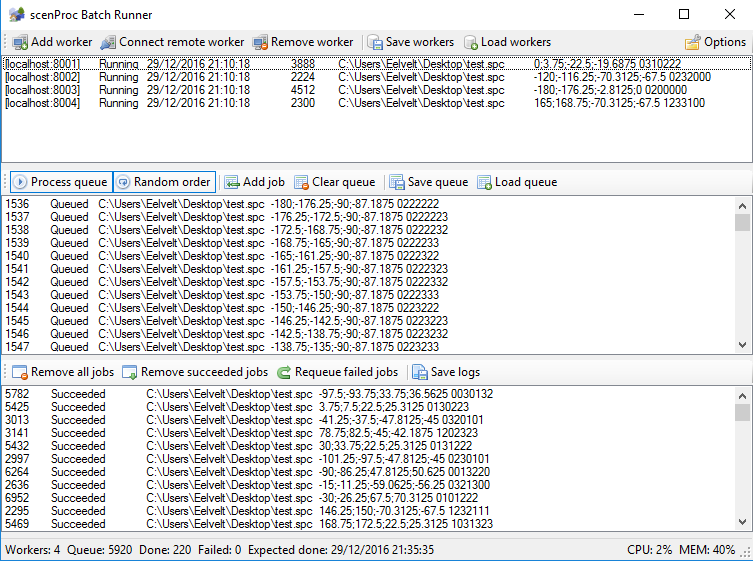
  The end of 2016 is fast approaching, so it’s the time of the year to look back a bit on the last year and look ahead a bit to 2017 as well. For scenProc the last year has been very exiting, with a lot of ideas I had in my head coming to life. But I should also say directly that as users you haven’t seen much from this yet, because most of the new features are currently in a kind of alpha phase and are being tested in a project I’m involved with. In 2017 I hope that these new features will also start to move to the development release. Although I do not have a clear release plan for that in mind yet. But let me use this blog post to shed a bit of light on the possible future of scenProc, by describing some of the things I’m working on.